In today’s rapidly evolving business landscape, staying ahead of the competition requires more than just a great product or service. It demands a deep understanding of the market, consumer behavior, and emerging trends. This is where the market research process becomes invaluable. In this blog post, we will delve more into market research and explore...
There is never a wrong time to do market research. However, most research projects are birthed because a company or organization is at a crossroads. Whether you’re a startup or Fortune 500 company, you’ll have critical decisions to make. This blog will detail common market research examples and how our clients have used them to...
Customer satisfaction is one of those metrics every organization wants to improve. But it’s not always obvious what actually moves the needle. The biggest gains happen when you can pinpoint what’s frustrating customers, what they value most, and what to fix first.
In our experience running customer satisfaction surveys, that clarity often comes from combining the right feedback methods with practical changes customers actually notice.
You do not need to be “data obsessed” to improve satisfaction, but you do need a reliable way to separate assumptions from reality.
Overview
Here are 9 proven ways to improve customer satisfaction:
Walk your buyer journey like a customer to uncover friction, confusion, and drop-off points.
Gather voice of customer feedback through interviews, focus groups, and customer surveys.
Measure satisfaction after key touchpoints using micro-surveys tied to one specific interaction.
Personalize messaging and experiences using customer segmentation insights, not generic demographics.
Set expectations early with clear confirmations, timelines, and “what happens next” messaging.
Strengthen self-serve support with searchable guides, videos, and task-based help articles.
Train and coach customer-facing teams with mystery shopping and simple quality scorecards.
Turn feedback into action by ranking priorities, assigning owners, and validating fixes.
Close the loop with updates, follow-ups, and annual benchmarking surveys to track progress.
Improve customer satisfaction with unbiased customer feedback and clear actions from Drive Research surveys.
Improve Customer Satisfaction With These 9 Strategies
1. Walk your buyer journey like a customer
This is the fastest “no-survey-required” move you can make.
A surprising amount of dissatisfaction comes from friction customers deal with quietly. Walking your journey like a real customer helps you spot friction you are too close to notice. You will quickly see where people get confused, hesitate, or give up.
You see friction you normally miss (slow pages, unclear steps, too many fields, broken links).
You find “confidence gaps” where customers hesitate because pricing, policies, or next steps are not clear.
You reduce customer effort, which often has a big impact on satisfaction because customers value “easy.”
You catch inconsistencies across channels (website vs. sales team vs. support), which creates frustration.
How to do customer journey mapping
Start where customers actually start. Begin from the same places customers enter, such as Google search, an ad, social, an email link, or a referral site. Use a private browser, log out, and act like a first-time visitor so you see the experience without shortcuts.
Complete the top 2 to 3 “jobs” customers come to do. Pick the most common actions customers try to complete and run each one end-to-end. For B2B that might be requesting pricing or booking a demo. For B2C it might be buying, scheduling, or tracking an order.
Use a simple “friction checklist” as you go. Notice anywhere you pause, reread, or feel uncertain. Watch for unclear next steps, too many fields, surprises in pricing or policies, slow load time, and dead ends. If you feel annoyed, your customers probably do too.
Capture what you find and fix the easiest wins first. Write down the top three points of confusion, the top three effort-heavy steps, and the biggest trust concern. Fix one or two quick issues immediately, then rerun the same journey to confirm it feels simpler and faster.
If you’re trying to improve customer satisfaction without customer feedback, you’re basically guessing.
We’ve seen situations like these over and over: Internal teams assume the problem is price, but a customer survey reveals the real issue is follow-up. Customers mention waiting days for an update, needing to email twice, or feeling like their request disappeared after they hit submit.
Customer research puts real data at the forefront, and makes the drivers of dissatisfaction hard to ignore. It shows you where frustration is coming from, how often it is happening, and which fixes will have the biggest impact first.
Instead of debating opinions internally, you get a clear, ranked list of priorities backed by evidence.
How to collect customer feedback
Start with customer interviews or focus groups to hear what customers are really experiencing, in their own words. In our experience, a handful of conversations will surface the real friction fast, and give you the context you need before you decide what to measure at scale.
Run a customer satisfaction survey program (CSAT, CES, NPS) to quantify what you heard in qualitative research and track it over time. Pair the customer satisfaction metrics with a few targeted questions about key touchpoints so you can see exactly which parts of the experience are pulling satisfaction down.
NPS vs. CSAT vs. CES: What’s the difference?
A customer survey can measure CSAT, CES, and NPS in the same study, because each metric looks at satisfaction from a different angle.
CSAT measures satisfaction with a specific experience
CES measures how easy or difficult that experience felt
NPS measures overall loyalty and likelihood to recommend.
When used together, these metrics give you a more complete picture of customer satisfaction, especially when you pair them with open-ended feedback to understand what is driving the scores.
How a B2B brand used customer feedback to prioritize CX improvements
A B2B company in the health and wellness space came to our customer survey company to better understand customer service perceptions, satisfaction levels, brand perception, and NPS. We surveyed their customer list and collected responses in a few weeks.
The feedback confirmed major strengths (customers frequently described the brand as easy, consistent, and trusted), while also revealing clear opportunities: faster lead times and more proactive supply updates, more pricing flexibility, and better marketing assets to support customers’ sales teams.
To make the results actionable, our team used an importance vs. performance view to spotlight the biggest “fix-first” areas that could move loyalty most.
3. Measure satisfaction after key customer interactions
A lot of customer satisfaction issues are not “overall” problems, they’re tied to a specific moment in the journey.
For instance, when we’re working with financial institutions on member satisfaction surveys, a common theme we see is customers feeling left in the dark during time-sensitive requests, like opening an account or resolving a fraud claim.
The frustration is rarely the policy itself. It’s the lack of clear updates on what’s happening, what’s needed, and when it will be resolved.
Measuring satisfaction right after key interactions captures what happened while it’s still fresh and specific. It also helps you connect feedback to the exact touchpoint that needs attention, instead of trying to interpret a general complaint later.
How to measure customer satisfaction after mini interactions
Use micro-surveys after common customer exchanges such as, onboarding, delivery, or checkout to capture quick, in-the-moment feedback tied to one experience. Keep it simple (one rating question plus one open-ended “What could we have done better?”) and tag results by interaction type so you can quickly spot patterns. In our experience, the open-end is where the real gold is, it tells you what caused the score, not just that the score dropped.
Create a fast “make it right” loop for low scores so unhappy customers do not sit and stew. Set a clear trigger (for example, any low rating or a negative comment), assign an owner, and respond with a specific next step, not a generic apology. Even when you cannot fix the underlying issue immediately, a quick follow-up that confirms you heard them and explains what happens next can prevent repeat contacts and rebuild trust.
Measure satisfaction and act confidently with our full-service customer survey company.
Personalization improves customer satisfaction because it reduces the “this isn’t for me” feeling. When the experience reflects what someone actually cares about, customers spend less time hunting, second-guessing, or seeking out other options.
Expectations are also rising. McKinsey reports 71% of consumers expect personalized interactions, and 76% get frustrated when they do not receive them.
How to make customer experiences more personalized
Run a customer segmentation study in order to group customers by what drives their decisions (not just age, industry, or income). When you understand the different segments, you can tailor messaging, content, and journeys to what each group values most, instead of forcing one generic experience on everyone.
Use the segmentation insights to build “segment plays” across touchpoints. For example, map each segment to a few simple decisions: which benefits to lead with, which proof points reduce anxiety, which offers or content to show first, and which support topics to proactively surface.
Customer segmentation example
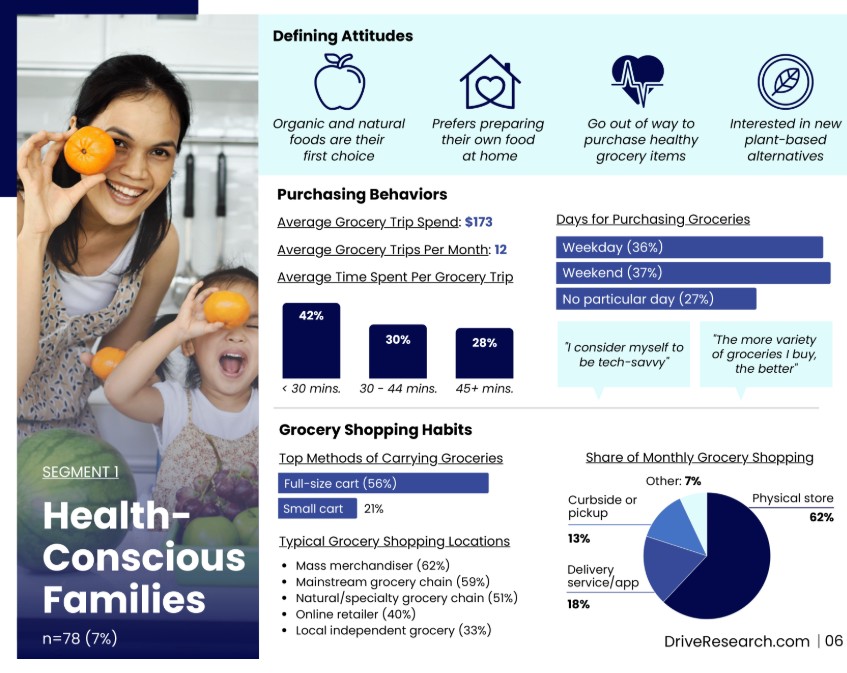
In our grocery shopper segmentation study, we identified seven distinct grocery shopper segments using a survey of over 1,000 consumers. Drive Research found clear differences in what motivates people, even among those buying the same products.
For example:
Some shoppers behave like Health-Conscious Families, prioritizing healthier items, planning meals, and shopping frequently.
Others look more like Anti-Shoppers, aiming to minimize grocery effort and cost, and leaning on convenience like curbside or online ordering.
Insights like these help brands stop writing “average shopper” messaging and instead tailor the experience, from promotions and product bundles to store layouts, pickup options, and email content, to match how each segment actually shops.
5. Improve proactive communication and set expectations
Customers can be surprisingly patient. They don’t always need an instant resolution, they just need to know you’re on it.
A quick confirmation and a realistic timeline, especially in those “now I’m waiting” moments like after someone submits a form, pays an invoice, or opens a support ticket, can do a lot for satisfaction.
Done well, proactive communication gets ahead of the questions customers are already thinking, so they feel informed instead of left guessing.
Ways to communicate proactively with customers
Improve confirmation emails, timelines, and “what happens next” messaging so customers never wonder if their request went through. A strong confirmation sets expectations in plain language: what you received, when they will hear back, what the next step is, and who to contact if something changes.
Add status updates for orders, projects, or support tickets to remove the “did anyone see this?” feeling. Updates do not have to be fancy. Even a simple progress message like “in review,” “scheduled,” or “waiting on X” can prevent customers from chasing you for answers.
Test message clarity with quick customer interviews or message testing before rolling changes out broadly. In our experience, internal teams write communications that make perfect sense to them, but confuse customers because of jargon, missing context, or vague timing. A short round of in-depth interviews with select customers helps you tighten wording, remove friction, and confirm customers understand what to do next.
6. Strengthen self-serve support
A strong self-serve experience improves satisfaction because it lets people get answers on their schedule, without waiting in a queue or going back and forth over email.
Gartner reported a similar shift on the B2B side: 61% of B2B buyers prefer a rep-free buying experience, which is a big signal that many customers would rather self-educate and self-serve when they can.
And as a B2B buyer myself, I agree. I’ve been a HubSpot user for nearly a decade, and what first pulled me in was the depth of free guides, how-to videos, and support resources.
Today, a fifth of our marketing budget goes to HubSpot, and that early self-serve experience played a big role in building trust and satisfaction from the start of my journey.
Ways to do improve self-serve support options:
Build or improve a help center with FAQs, guides, and short how-to videos focused on the questions customers ask most. Keep it organized around real tasks (“reset password,” “change billing,” “return an order,” “invite a teammate”), not internal product categories, so people can find answers without learning your terminology.
Use search analytics and ticket data to decide what content to add next instead of guessing. Look for common searches that return no results, articles with high exits, and ticket themes that repeat week after week. In our experience, adding content for the top few “repeat questions” can reduce frustration quickly, because customers stop hitting the same dead ends.
Turn customer feedback into action with expert-led CSAT surveys from Drive Research.
Even with the best product or service, customer satisfaction often comes down to the human moments.
The call that de-escalates a problem
The email that actually answers the question
The rep who makes the next step crystal clear
The challenge is consistency. One great interaction can win loyalty, but one sloppy handoff can undo a lot of goodwill.
Ongoing training and coaching gives teams shared standards, so customers get the same level of clarity and care no matter who picks up the conversation.
How to audit and improve customer service
Run mystery shopping and quality audits (call, chat, and email) using a simple scorecard to see what customers are really experiencing. Keep the scorecard practical: response time, whether the rep addressed the full question, whether they used plain language, and whether the customer left knowing what happens next.
Coach for empathy, clarity, and next-step guidance because those are the skills customers feel immediately. Make coaching specific by rewriting unclear responses, practicing how to explain policies in plain language, and standardizing a simple “next step” closing line so customers are never left guessing.
💡 Pro Tip: If you’re running customer surveys, do not just skim through the open-ended feedback. One thing we always do for clients is flag when customers call out a sales rep by name. That gives the organization a clear opportunity to learn from what that rep is doing well, turn it into repeatable best practices, and coach the rest of the team.
8. Take action with customer feedback
Collecting feedback is only half the battle in improving satisfaction. The most important part is turning it into changes customers can actually recognize.
This is where we see a lot of organizations stall out. The insights never leave the reporting deck, and the customer experience stays exactly the same. It’s why we always include clear, practical recommendations in our customer survey reports so clients have a real starting point.
But the impact only happens when the organization actually takes ownership and makes the changes.
Ways to take action with customer feedback:
Turn feedback into a short, ranked priority list. Group comments and scores into themes, then rank them by impact and frequency. In our experience, the fastest wins often come from reducing effort, removing confusion, or tightening up communication in one high-traffic touchpoint.
Assign ownership and deadlines to each fix. Every priority needs a single owner, a clear next step, and a timeline. Without that, the same issues show up month after month, and customers notice.
Validate changes with customers before a full rollout. Use interviews or a small pilot survey to confirm you’re solving the real problem. This prevents teams from shipping “fixes” that sound good internally but do not actually improve the experience.
9. Close the loop with customers
Satisfaction sticks when customers can connect the dots between what they shared and what you changed.
Following up, sharing what changed, and acknowledging customer input makes people feel seen. Over time, that consistency becomes part of your customer experience, not just a one-off initiative.
It also sets a higher standard internally, because teams know progress is tracked and shared.
Ways to do this:
Share “You said, we did” updates through the channels customers already use, like email, in-product messages, or social. Keep it simple: what you heard, what you changed, and when it’s live. Even small updates can create a surprising amount of goodwill.
Follow up with customers who gave feedback to confirm the fix helped, especially when someone had a poor experience. A short personal note goes a long way, and it can uncover whether the problem is truly solved or if there’s still friction you missed.
Re-measure CSAT by surveying customers at least once a year. That gives you enough time to act on the first round of feedback, then benchmark results year over year to see what improved (and what didn’t). Each wave is also a chance to refresh your survey. When we execute third-party customer surveys year-over-year, we keep core tracking questions the same, and add new questions based on what our client’s customers care about right now.
Improve Customer Satisfaction With Drive Research
If you want to improve customer satisfaction and keep it improving year after year, Drive Research can help.
We’re a full-service market research firm that partners with both B2B and B2C teams to run customer satisfaction surveys (CSAT, CES, NPS), voice of customer programs, customer interviews and focus groups, and segmentation studies that help you understand what’s driving dissatisfaction and what to fix first.
Contact our team today to learn more about our capabilities.
Frequently Asked Questions About Improving Customer Satisfaction
What is the best way to improve customer satisfaction?
The best way to improve customer satisfaction is to identify what is frustrating customers most, then fix those issues first. In our experience, that usually starts with a mix of customer feedback, journey review, and practical changes to communication, support, or service delivery.
How do you measure customer satisfaction?
Customer satisfaction is commonly measured through customer surveys using metrics like CSAT, CES, and NPS. Many organizations also use post-interaction surveys, interviews, and open-ended feedback to understand not just the score, but what is driving it.
Should B2B and B2C companies measure customer satisfaction differently?
The goal is the same, understand what is driving satisfaction and dissatisfaction, but the approach can look different. B2B teams may focus more on relationships, account management, and ongoing service, while B2C teams may focus more on transactions, convenience, and speed across high-volume touchpoints.
Can Drive Research help with customer satisfaction surveys?
Yes. Drive Research is a full-service market research company that helps B2B and B2C organizations run customer satisfaction surveys, voice of customer studies, interviews, focus groups, and segmentation research to uncover what is driving customer satisfaction and what to improve next.
We analyze more than data—we also track how our site is used to improve your experience. Cookies help us understand what’s working so we can deliver the most relevant insights. Click “Accept” to enable full functionality.
Functional
Always active
The technical storage or access is strictly necessary for the legitimate purpose of enabling the use of a specific service explicitly requested by the subscriber or user, or for the sole purpose of carrying out the transmission of a communication over an electronic communications network.
Preferences
The technical storage or access is necessary for the legitimate purpose of storing preferences that are not requested by the subscriber or user.
Statistics
The technical storage or access that is used exclusively for statistical purposes.The technical storage or access that is used exclusively for anonymous statistical purposes. Without a subpoena, voluntary compliance on the part of your Internet Service Provider, or additional records from a third party, information stored or retrieved for this purpose alone cannot usually be used to identify you.
Marketing
The technical storage or access is required to create user profiles to send advertising, or to track the user on a website or across several websites for similar marketing purposes.