In today’s rapidly evolving business landscape, staying ahead of the competition requires more than just a great product or service. It demands a deep understanding of the market, consumer behavior, and emerging trends. This is where the market research process becomes invaluable. In this blog post, we will delve more into market research and explore...
There is never a wrong time to do market research. However, most research projects are birthed because a company or organization is at a crossroads. Whether you’re a startup or Fortune 500 company, you’ll have critical decisions to make. This blog will detail common market research examples and how our clients have used them to...
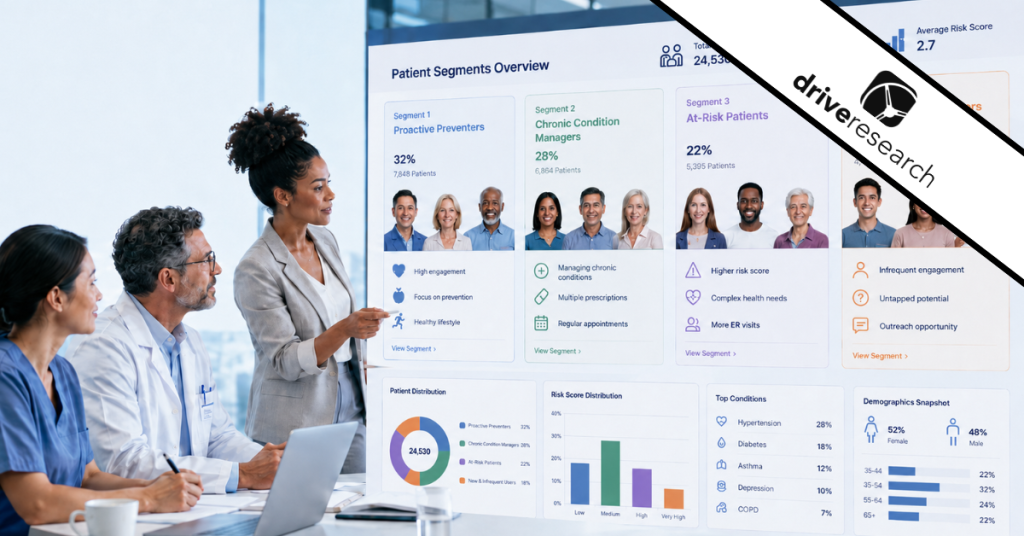
Healthcare Segmentation Research in Short: Healthcare segmentation research divides patients, providers, and other healthcare audiences into meaningful, detailed groups based on shared characteristics, needs, attitudes, and behaviors.
Common research approaches include demographic, psychographic, behavioral, and needs-based segmentation, helping healthcare brands better understand who they serve and why they make certain decisions. These insights can then be used to guide stronger, more personalized experiences, outreach, and retention strategies.
No two patients or providers are exactly alike. They’re a diverse mix with different needs, motivations, behaviors, and expectations that can vary dramatically based on specific factors. Treating a wide audience like just one large group can lead to missed opportunities, which is why healthcare segmentation research has become essential.
For healthcare brands, segmentation research is a strategic approach that categorizes audiences into specific segments, allowing for more targeted messaging, personalized care, and more effective marketing campaigns.
In this guide, we’ll break down the core types of healthcare segmentation, explore the benefits for both patient-facing and B2B healthcare brands, and share best practices for turning data and insights into measurable business ROI.
Stop treating every healthcare audience the same with segmentation research.
In market research, healthcare segmentation is the process of collecting data to divide a target audience into meaningful groups. These groups (also called segments) are divided into groups defined by variables that influence purchasing behaviors, pain points, preferences, and engagement with different healthcare services.
For healthcare brands, it’s smart to take segmentation beyond basic demographics. Researchers can examine a range of factors, from health status, utilization, care preferences, motivations, and attitudes toward different providers. By applying research methods like surveys, focus groups, and advanced analytics, researchers can identify patterns in data to reveal distinct audience profiles.
The goal is not just to classify audiences, but to identify characteristics that help healthcare brands better understand and target each segment. For example, a health insurance provider may discover that one segment is especially price-sensitive and majorly prefers affordable benefit options while another puts more value on comprehensive coverage or access to specific providers.
Market researchers can then translate these findings into profiles that inform areas like:
Service and product innovation
Marketing and outreach messaging
Patient and customer experience programs
When done right (usually with an expert market research partner) healthcare segmentation research can help as a strategic tool in driving down marketing costs, improving customer retention, and driving more customer acquisition across all segments.
Why Segmenting Matters For Healthcare Brands
Like we said, segmentation is more than a marketing tactic. It can help brands strengthen customer and patient relationships while making smarter financial decisions overall.
When organizations actually understand the different groups they serve, they can better tailor their messaging, services, and experiences around audience value. So, the goal of segmentation here isn’t to reach fewer people, but to understand your audience’s differences so you can reach them more effectively.
Improve Patient and Customer Retention
The way to look at segmentation and retention is like this: When trying to keep patients loyal, it’s not always about changing the service itself, but it’s about changing how that service is delivered, positioned, or communicated to different groups.
Instead of copy and paste campaigns, thanks to segmentation, brands can use targeted, adapted approaches that don’t make customers feel like they’re lumped in with the rest, going through an impersonal experience.
This can ultimately drive stronger retention and loyalty, as is supported by recent data.
Improve Customer Acquisition
Segmentation research allows brands to improve their approach to bringing in new customers. By understanding which groups exist within a target market, it pushes organizations to focus specific marketing and strategies on audiences that are the most likely to need, value, or engage with their services.
Factors like demographics, coverage desires, and health needs can all influence how an audience responds to a campaign. Segmentation helps identify those differences and groups them out so healthcare brands can adjust their messaging and positioning accordingly.
And rather than spending the same resources trying to reach everyone, organizations can prioritize high-potential segments and create strategies around the most influential pain points and motivations.
Research Tip: Segmentation is most valuable when the findings lead to different decisions. Instead of seeing this as a challenge, remember that this will ultimately help your organization better tailor messaging, outreach, and experiences to those who matter most: your patients.
Common Types of Healthcare Segmentation
Healthcare segmentation research typically starts with the basic part of grouping patients by specific factors. Rather than relying on one characteristic alone, these multiple factors dive into the fine details of who audiences are, what they need, and how they make healthcare decisions.
Demographic
Demographics segmentation is the most common way to segment (not just in healthcare but all segmentation research) because it’s just as effective as it is simple. This straightforward approach provides a useful foundation for understanding basic differences across a target population, which is extremely valuable for shaping marketing or outreach.
These segments can be based on:
Age
Gender
Income
Education
Geographic location
Employment status
Household characteristics
For instance, a healthcare system may find that their younger patients are more interested in mobile scheduling and virtual resources, while older patients place greater value on in-person appointments. These findings can not only help the system figure out how to divide their resources in a better way so that they can actually meet everyone’s needs.
Psychographic
Psychographics segmentation looks beyond who an audience is to understand why they make certain decisions. It groups audiences based on their values, beliefs, attitudes, and lifestyles that influence their relationship with healthcare.
Psychographic research can explore differences in:
Desire for convenience
Interest in new healthcare technology
Perceptions of personal health and wellness
Motivations for seeking or avoiding care
Trust in healthcare providers
Research Tip: Using this approach is valuable to create brand messaging that targets audiences in a more personal and authentic way. By better understanding the motivations and mindsets of their audience, engaging with audiences can be done on a deeper level.
Behavioral
Behavioral segmentation focuses on how your target audience interacts with your services or healthcare services in general. Or, in other words, what patients and customers actually do and how this relates to your services.
Instead of grouping an audience according to characteristics or attitude, this approach looks at patterns of engagement, usage, and decision-making.
Audience segments can be created based on behaviors like:
Frequency of healthcare visits
Telehealth usage
Appointment cancellations or no-shows
Preventative care participation
Engagement with patient portals or online platforms
Usage of other specific healthcare services
For healthcare brands, behavioral data most often leads to actionable insights since it allows brands to identify audiences who are likely to engage with their services and who is least likely to (based on behavior). It can help with client retention by designing customer loyalty programs for consistent users, for example.
Needs-Based
Needs-based segmentation is based on identifying healthcare requirements instead of other factors.
Rather than focusing primarily on demographic characteristics or past behaviors, this approach can help organizations identify groups with specific, different healthcare priorities and provide specialized help.
Those needs may include:
Chronic disease management
Preventative care
Surgical care
Maternal or prenatal care
Mental health services
Ongoing care coordination
For example, a healthcare organization in a big city that targets a wider patient base may uncover one segment that primarily needs better access, but have been struggling to get the help they need because they’re such a small sub-group. With this new knowledge, the organization can shift resources to better serve that specific population.
Segmentation Type
Key Question
Common Variables
Example
Demographic
Who are they?
Age, income, education location
Comparing care preferences across age groups
Psychographic
Why do they make certain decisions?
Values, attitudes, motivations, beliefs
Identifying patients who prioritize convenience vs. provider relationships
Behavioral
What do they do?
Usage, engagement, visits, switching
Segmenting frequent preventative care vs. reactive care users
Needs-Based
What do they need?
Care requirements, services, support
Identifying rural patients needing routine vs. specialized care access
Ready to transform patient care quality with healthcare segmentation research?
When it comes to segmentation research methodologies, what’s great is there is no single “right” method or one-size-fits-all approach to executing a project. The right approach depends on your target audience, business goals, and the types of insights needed to build meaningful segments. So, these methodologies are designed to be versatile.
Even more, healthcare organizations can also combine multiple methodologies to better understand what drives behaviors, preferences, and decisions.
Surveys
Online surveys are one of the most effective ways to gather quantitative data from a large audience. With the right sampling strategy, surveys can also capture nuanced differences within broader samples and across patients, providers, members, or other healthcare audiences.
Healthcare segmentation surveys can explore factors like:
Demographics (age, income, education)
Healthcare needs and current health status
Provider or health plan usage
Satisfaction and loyalty
Care preferences
Motivations and barriers to seeking care
Attitudes towards healthcare costs and coverage
For example, a healthcare organization could survey patients in rural US communities about their access to robust prenatal care. Segmentation responses by factors like distance to providers, transportation access, insurance coverage, and educational resources provided could reveal which audience segments experience the most struggles with care and where additional services are needed.
In-Depth Interviews
While surveys are great for large-scale feedback, in-depth interviews provide deeper insights from fewer participants. By speaking with a specific sample (chosen based on your goals), healthcare brands can uncover deeper motivations and decisions that are difficult to capture through quantitative research along
For example, healthcare IDIs can explore:
What drives trust in a healthcare organization
How patients evaluate different treatment options
Why certain audiences avoid or delay care
How different groups perceive healthcare messaging
The barriers that might prevent parents from using services like telehealth
These interviews provide major nuance in the responses they get from their sample, which can help brands utilize real experience and perspectives in their strategy shifts.
Advanced Analytics
Advanced analytics techniques (like cluster analysis, factor analysis, and predictive modeling) can take raw data and turn it into audience segments your brand can use.
These approaches help look at patterns that aren’t obvious at first, like how demographics and psychographics might show a specific audience segment that cares about predictive care or service usage.
Depending on the research goals, advanced analytics also can help healthcare organizations:
Group audiences based on shared attitudes, behaviors, or needs
Identify strongly differentiating variables
Determine which groups are most likely to adopt telehealth
Predict which patients or members are most likely to switch
Identify which audiences respond most to outreach
Prioritize segments based on potential business impact
Here is where segmentation can become especially actionable because advanced analytics give segments deeper, relatable substance rather than simply describing different audiences.
Method
Best For
Type of Insight
Example Healthcare Use
Online surveys
Measuring large audiences and identifying patterns
Primarily quantitative
Segmenting health plan members by needs, preferences, and likelihood to switch
In-depth interviews
Understanding motivations and experiences
Qualitative
Exploring why certain patient groups delay care or prefer specific providers
Advanced analytics
Building and predicting distinct audience segments
Quantitative/modeling
Identifying patient groups most likely to adopt telehealth or respond to outreach
Ultimately, healthcare segmentation research helps companies move beyond a one-size-fits-all mindset to better understand the audiences they are serving. With the right insights, healthcare brands not only can improve messaging, but also strengthen patient experience and close care gaps.
Drive Research is a full-service healthcare market research company that helps organizations understand the audience segments that matter most. From survey design and recruitment to providing strategic recommendations, our team can manage the entire segmentation research process so you can focus on turning your findings into more informed business decisions.
Demographic Segmentation: What Is It & How To Do It
Blog Posts
7 Tips to Conducting Market Research with Doctors & Physicians
When You Give Us A Cookie
We analyze more than data—we also track how our site is used to improve your experience. Cookies help us understand what’s working so we can deliver the most relevant insights. Click “Accept” to enable full functionality.
Functional
Always active
The technical storage or access is strictly necessary for the legitimate purpose of enabling the use of a specific service explicitly requested by the subscriber or user, or for the sole purpose of carrying out the transmission of a communication over an electronic communications network.
Preferences
The technical storage or access is necessary for the legitimate purpose of storing preferences that are not requested by the subscriber or user.
Statistics
The technical storage or access that is used exclusively for statistical purposes.The technical storage or access that is used exclusively for anonymous statistical purposes. Without a subpoena, voluntary compliance on the part of your Internet Service Provider, or additional records from a third party, information stored or retrieved for this purpose alone cannot usually be used to identify you.
Marketing
The technical storage or access is required to create user profiles to send advertising, or to track the user on a website or across several websites for similar marketing purposes.