In today’s rapidly evolving business landscape, staying ahead of the competition requires more than just a great product or service. It demands a deep understanding of the market, consumer behavior, and emerging trends. This is where the market research process becomes invaluable. In this blog post, we will delve more into market research and explore...
There is never a wrong time to do market research. However, most research projects are birthed because a company or organization is at a crossroads. Whether you’re a startup or Fortune 500 company, you’ll have critical decisions to make. This blog will detail common market research examples and how our clients have used them to...
How an IHUT Helped Evaluate Pregnancy Tests Before Launch
Emily Rodgers
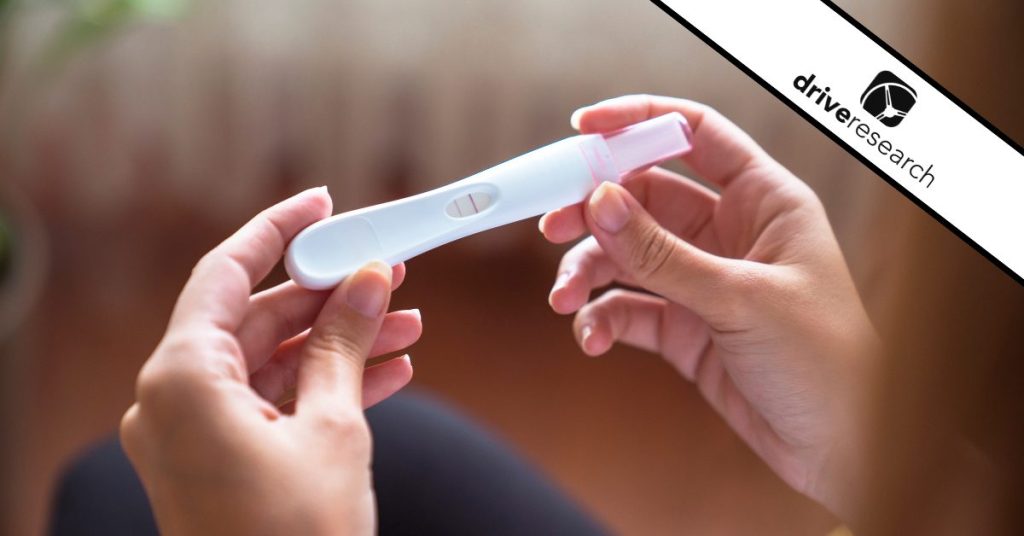
A national online retailer was preparing to expand its private-label pregnancy test line. Before moving forward, the product team needed more than confirmation that the tests worked under controlled conditions.
They wanted to understand how real women would experience each product at home, during a moment when unclear instructions or a difficult-to-read result could carry significant emotional weight.
Drive Research designed an in-home usage test (IHUT) to compare four pregnancy tests: two digital options and two analog options.
The study evaluated potential supplier products alongside established national brands, giving the client a realistic benchmark for product performance and customer experience.
Validate product performance with real users in real environments through our in-home usage tests.
The Challenge: Evaluating More Than Technical Performance
Pregnancy tests are not ordinary consumer products. People may use them while feeling hopeful, anxious, scared, or uncertain. Even a small source of friction can affect whether someone trusts the result.
In general, the research needed to explore…
How easily consumers could open and handle each test
Whether the instructions were clear
How confident participants felt after viewing the result
Whether the product felt comparable to a familiar national brand
The client had previously encountered issues with pregnancy tests that were difficult to read which created frustration around usability. Those problems affected confidence in the product and made the overall experience feel unreliable during an already emotional moment.
For the new line, leadership wanted stronger evidence that the tests would be accurate, easy to use, and clear enough for customers to trust before launch.
Designing a Sensitive In-Home Product Test
Drive Research recruited more than 100 women across the United States.
Participants represented several relevant situations, including those:
Who were pregnant
Actively trying to conceive
Who were able confirm they should receive a negative result
This mix allowed our research team to examine product use across different circumstances without treating every participant’s experience as identical.
How We Structured the IHUT for Success
Study detail
Why it mattered
Removed visible brand identifiers
Each test was labeled with a color rather than a brand name. This helped participants focus on the actual product experience instead of being influenced by brand reputation.
Balanced the order of use
Each brand of pregnancy test had an equal opportunity to be used earlier or later in the testing period, reducing the risk that familiarity or fatigue would favor one option.
Compared products in matched pairs
Digital tests were compared with digital tests, while analog tests were compared with analog tests. This created a more relevant benchmark for each supplier product.
The project required more coordination than simply mailing samples and sending one follow-up survey. Our IHUT company managed participant qualification, kitting, shipping, survey programming, ongoing communication, and data collection.
This full-service approach is part of our typical IHUT process, but the logistics were adapted to the sensitive nature of this particular study.
Build confidence in your next product launch with a full-service IHUT.
Participants completed a brief survey after using each pregnancy test. Asking for feedback shortly after use helped capture details that might have been forgotten in a single survey at the end of the study.
Each mini questionnaire examined the following:
Purchase intent
Likelihood to recommend
Satisfaction with specific elements of the test (ie. result readability, instruction clarity, physical design, perceived accuracy, and time to result)
What the Survey Captured
The “Why” Behind the Ratings
Open-ended questions asked participants what they liked and what could be improved. These comments helped explain whether lower scores were tied to issues such as difficult packaging, unclear instructions, or uncertainty during use.
When and How Results Were Read
Participants reported when they used each test and how long they waited before checking the result. This helped the research team separate potential product issues from timing, instruction, or user-related factors.
The Emotional Experience
The survey also measured how participants felt after taking each test. For a product this personal, feelings such as reassurance, anxiety, or confusion were important indicators of whether the experience inspired trust.
Turning IHUT Feedback Into Launch Direction
Identify the strongest product direction
The research showed which pregnancy tests of the retailer were most competitive with national brands and where technical performance translated into a better customer experience.
Separate fixable issues from larger concerns
Not every weakness meant a product feature should be rejected. The analysis helped distinguish between more serious performance concerns and issues that could be addressed before launch, such as packaging, instructions, or interface design.
Understand what builds confidence
Small design choices had a noticeable impact on trust. Clear displays and visible progress indicators helped reduce uncertainty, while hard-to-read lines and awkward packaging created hesitation.
Strengthen the launch strategy
The findings gave the retailer clearer direction for supplier conversations, product refinements, and positioning. For a private-label pregnancy test, price alone would not be enough. The product experience and packaging also needed to communicate reliability quickly.
Why the Pregnancy Test IHUT Approach Mattered
Lab testing can confirm whether a pregnancy test performs under controlled conditions. It cannot fully show how customers will experience the product at home.
For product and quality managers, that gap matters. Real users may struggle to open the packaging, misinterpret instructions, check results too early or too late, or question a faint line.
These issues may not appear in a lab, but they can still lead to poor reviews, customer complaints, and lost confidence after launch.
The IHUT placed each product in the hands of intended users and captured feedback immediately after use. This gave the client a clearer view of both technical performance and real-world usability.
The Key Takeaway: Rather than relying on lab results alone, the team could identify which issues required product changes before launch and which were tied to packaging, instructions, or the overall user experience.
Drive Research helps product and quality teams evaluate how products perform outside controlled lab settings. We manage the full IHUT process, from participant recruitment and product shipping to data collection and reporting, so teams can identify usability issues and make more confident launch decisions.
Product Testing Research Guide From Market Research Pros
Blog Posts
6 Factors to Consider Before a Product or Service Launch
When You Give Us A Cookie
We analyze more than data—we also track how our site is used to improve your experience. Cookies help us understand what’s working so we can deliver the most relevant insights. Click “Accept” to enable full functionality.
Functional
Always active
The technical storage or access is strictly necessary for the legitimate purpose of enabling the use of a specific service explicitly requested by the subscriber or user, or for the sole purpose of carrying out the transmission of a communication over an electronic communications network.
Preferences
The technical storage or access is necessary for the legitimate purpose of storing preferences that are not requested by the subscriber or user.
Statistics
The technical storage or access that is used exclusively for statistical purposes.The technical storage or access that is used exclusively for anonymous statistical purposes. Without a subpoena, voluntary compliance on the part of your Internet Service Provider, or additional records from a third party, information stored or retrieved for this purpose alone cannot usually be used to identify you.
Marketing
The technical storage or access is required to create user profiles to send advertising, or to track the user on a website or across several websites for similar marketing purposes.